
Login to view
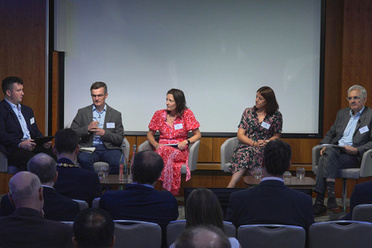
At the 2026 IGEM Policy Conference, industry leaders came together to discuss how biomethane can play a greater role in delivering the UK's energy security, supporting agriculture and accelerating decarbonisation.
Hosted by Charles McAllister, Director of the Green Gas Taskforce, the panel explored the policy, commercial and technical changes needed to unlock biomethane's full potential, alongside the opportunities it presents for farmers, industrial energy users and the wider economy.
Charles McAllister, Director, Green Gas Taskforce (Chair)

Sian Hamson, UK Supply Chain Sustainability Senior Manager, PepsiCo
Responsible for advancing the company’s sustainability ambitions across its UK supply chain, including spearheading the recent biomethane purchase agreement.

Lucy Hopwood, Principal Consultant and Director, Alder Bioinsights
Provides strategic advice, planning and technical expertise to public and private sector clients across the UK and internationally, with a focus on policy, technology and market development. She also authored the Genesis report for the Green Gas Taskforce.

Chris Huhne, ADBA Chair, Anaerobic Digestion and Bioresources Association
Chair of the Anaerobic Digestion and Bioresources Association (ADBA) and a former UK Energy and Climate Change Secretary. He is the author of four books on economics, founded a city credit ratings business, and advises organisations on the energy transition.

Dr Nick Primmer, Head of Policy and ESG, Future Biogas
Leads the organisation's engagement with government and associations, ensuring effective policies and regulations are in place for the delivery of Project Carbon Harvest, a venture to design and operate the UK's next generation of AD plants delivering BECS bioenergy with carbon capture and storage.

The discussion opened with a simple question: what is needed to unlock greater biomethane supply in the UK?
For Dr Nick Primmer, the answer was ensuring that progress is not held back by striving for perfection.
We need to make sure perfect is not the enemy of good.
While acknowledging legitimate concerns around issues such as methane leakage and operational risks, he argued these can be effectively managed through high standards and best practice, allowing policymakers to focus on biomethane's wider benefits across farming, energy and decarbonisation.
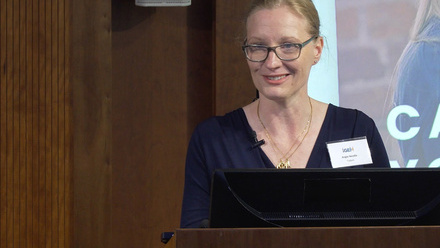
Speaking from an industrial energy user's perspective, Sian Hampson highlighted the need for long-term policy certainty, faster planning and grid connections, and continued efforts to reduce production costs.
We need certainty. So do developers and farmers, so that we've got the confidence to go and invest.
She stressed that businesses also need biomethane to become increasingly cost competitive, as companies like PepsiCo cannot pass additional costs on to consumers.
Lucy Hopwood encouraged delegates to broaden the conversation beyond biomethane purely as an energy source.
Biomethane provides an awful lot more than just energy.
Alongside renewable gas production, she highlighted the value of digestate as a nutrient source for agriculture, the production of biogenic carbon dioxide and the wider environmental benefits that strengthen the overall business case.
Chris Huhne reflected on the UK's early leadership in injecting biomethane into the gas grid, arguing that policymakers have underestimated the sector because of its current size rather than its future potential.
Drawing comparisons with developments across Europe following Russia's invasion of Ukraine, he pointed to biomethane's role in strengthening energy security and argued the UK should be thinking much bigger.
Policymakers should be putting resources into nurturing what is, at the moment, very small scale, but has the potential to be really crucial to our future and to our energy security.
He noted that the Green Gas Taskforce's assessment of around 120 TWh of UK biomethane potential demonstrates the technology could become comparable in scale to nuclear generation.
The discussion then turned to agriculture, with Lucy Hopwood outlining the significant financial pressures facing UK farmers following subsidy reform, rising input costs and volatile markets.
She described biomethane as an opportunity to provide farmers with greater market stability, more diverse income streams and lower fertiliser costs through the return of digestate to farmland.
Biomethane can be the lifeline that can really help many of these farmers continue farming.
She explained that closer relationships between growers and biomethane producers can help create more resilient agricultural businesses while supporting domestic food production.
Dr Nick Primmer expanded on the role of rotational cropping systems, explaining how Future Biogas works with a network of UK farmers. Rather than replacing food production, rotational energy crops form part of existing farming systems, improving soil health and supporting subsequent food crop yields.
He argued that this temporal approach to land use is often overlooked in policy discussions.
You're producing sustainable food and energy from the same land.
Representing one of those industrial energy users, Sian Hampson explained how PepsiCo assessed every available decarbonisation pathway before selecting biomethane as a key part of its strategy.
PepsiCo first prioritised efficiency improvements, heat recovery and electrification. However, constraints around cost, available space and technology maturity meant biomethane emerged as one of the company's most significant decarbonisation levers.
The session concluded with an audience Q&A, giving delegates the opportunity to put questions directly to the panel and explore some of the practical challenges facing the sector.
The Q&A reinforced a central theme of the session: unlocking biomethane will require collaboration across the energy, agricultural and industrial sectors, alongside a policy framework that gives developers, farmers and energy users the confidence to invest for the long term.
![Construction worker laying polyethylene pipe for water or gas [magnific sept 2026]](https://www.igem.org.uk/static/da0f6a5f-25c6-4b32-af5958585cd1b106/resourcegridlistingimagedefault_4d12532919c64e60a22baf03232bbf94_4a7c7e45a350/Construction-worker-laying-polyethylene-pipe-for-water-or-gas-magnific-sept-2026.png)
![Hydrogen fuel refilling station [magnific 2026]](https://www.igem.org.uk/static/a813c813-6b2b-4b67-8d0586d83a14951c/b10c2bf1-bf48-445b-a06c93db10c5fb3c/resourcegridlistingimagedefault_4d12532919c64e60a22baf03232bbf94_4a7c7e45a350/Hydrogen-fuel-refilling-station.png)
![hydrogen storage [shutterstock]](https://www.igem.org.uk/static/c97d7c2a-b729-4a73-bccb32ab26f1839f/resourcegridlistingimagedefault_4d12532919c64e60a22baf03232bbf94_4a7c7e45a350/shutterstock765921106-1.jpg)
![JCB Hydromax on the Bonneville Salt Flats [PR provided]](https://www.igem.org.uk/static/a726789d-930d-4cd8-b82b320f69f81635/resourcegridlistingimagedefault_4d12532919c64e60a22baf03232bbf94_4a7c7e45a350/JCB-Hydromax-on-the-Bonneville-Salt-Flats.png)