
Hynet: Decarbonising industry and power in the Northwest
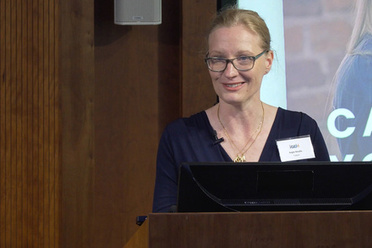
At IGEM’s recent Policy Conference, Dr Angela Needle, Director of Strategy at Cadent, set out the scale of the opportunity for hydrogen in the UK, highlighting the HyNet project and the wider role of gas networks in supporting the transition to net zero.
“The North West is the birthplace of hydrogen in the UK,” Dr Needle said, pointing to the region’s industrial heritage, existing infrastructure and potential to become a major hub for low-carbon hydrogen.
Speaking at the event, she argued that the UK already has many of the ingredients needed to become a world leader in hydrogen, “we have all the ingredients that we need to be top notch at hydrogen,” she said. “We have world-class operators, we've got oil and gas engineers, a world-class gas network, curtailed wind which will be billions by 2035, and salt caverns, so the fact we are stalling should be a concern.”
Dr Needle highlighted HyNet as a key example of how these assets can be brought together to support industrial decarbonisation. The project combines carbon capture and hydrogen infrastructure, with elements of the carbon capture network already under construction and pipeline works underway.
She stressed that low-carbon hydrogen will be particularly important for industrial sectors where direct electrification is difficult or commercially challenging. Chemicals, manufacturing, glass and automotive businesses are among those looking to hydrogen as part of their decarbonisation plans, with companies including Jaguar Land Rover, Kellogg’s and Pilkington Glass cited as examples.
“These companies want decarbonised gas as it gives them a competitive advantage,” she said.
However, Dr Needle warned that delays to hydrogen development risk undermining confidence among businesses that have been planning around the availability of low-carbon gas.
“We've promised hydrogen to these companies for about five years now,” she said. “In fact, 2026 is the year that this project would have been completed on the timeline we set out originally.”
She expressed disappointment that the original timetable had not been maintained, warning that continued delays risk pushing back investment decisions and increasing costs.
“Waiting is expensive,” she said.
Dr Needle also emphasised that the case for hydrogen extends beyond industrial decarbonisation. Rather than viewing hydrogen as a replacement for electrification, she described it as part of a holistic transition, with an important role to play in providing flexibility and helping balance the wider energy system.
With increasing amounts of renewable electricity expected to come onto the system, she argued that hydrogen could help make use of periods of curtailed renewable generation while providing an additional source of flexibility and resilience.
Despite the challenges, Dr Needle said the sector has a clear understanding of what needs to happen next.
“We know what we need to do, we know where we need to go,” she said, while warning that delays are affecting delivery momentum and adding to costs.
Alongside infrastructure and investment, she also underlined the importance of developing the skills needed to deliver the hydrogen transition. She highlighted HyNet’s engagement with apprentices, schools and young people, including workshops delivered to hundreds of pupils, as part of wider efforts to encourage the next generation of engineers into the sector.
The message throughout Dr Needle’s presentation was one of urgency: the UK has the infrastructure, expertise and industrial demand to establish a successful hydrogen economy, but needs to move from planning and policy development into delivery.
The session concluded with a panel Q&A, with delegates putting questions to the speakers on hydrogen blending and the future development of hydrogen networks. Speakers were also asked about the Government’s announcement earlier that day that the Department for Energy Security and Net Zero (DESNZ) would be required to find a further £2 billion in savings as part of the new Defence Investment Plan.
Dr Needle described the sector as “very” concerned, highlighting the uncertainty that further pressure on departmental spending could create for hydrogen development.
Watch the full presentation and Q&A on IGEMtv below.

![Hydrogen fuel refilling station [magnific 2026]](https://www.igem.org.uk/static/a813c813-6b2b-4b67-8d0586d83a14951c/b10c2bf1-bf48-445b-a06c93db10c5fb3c/resourcegridlistingimagedefault_4d12532919c64e60a22baf03232bbf94_4a7c7e45a350/Hydrogen-fuel-refilling-station.png)
![hydrogen storage [shutterstock]](https://www.igem.org.uk/static/c97d7c2a-b729-4a73-bccb32ab26f1839f/resourcegridlistingimagedefault_4d12532919c64e60a22baf03232bbf94_4a7c7e45a350/shutterstock765921106-1.jpg)

![JCB Hydromax on the Bonneville Salt Flats [PR provided]](https://www.igem.org.uk/static/a726789d-930d-4cd8-b82b320f69f81635/resourcegridlistingimagedefault_4d12532919c64e60a22baf03232bbf94_4a7c7e45a350/JCB-Hydromax-on-the-Bonneville-Salt-Flats.png)